

A Life in Sound, Structure, and Imagination
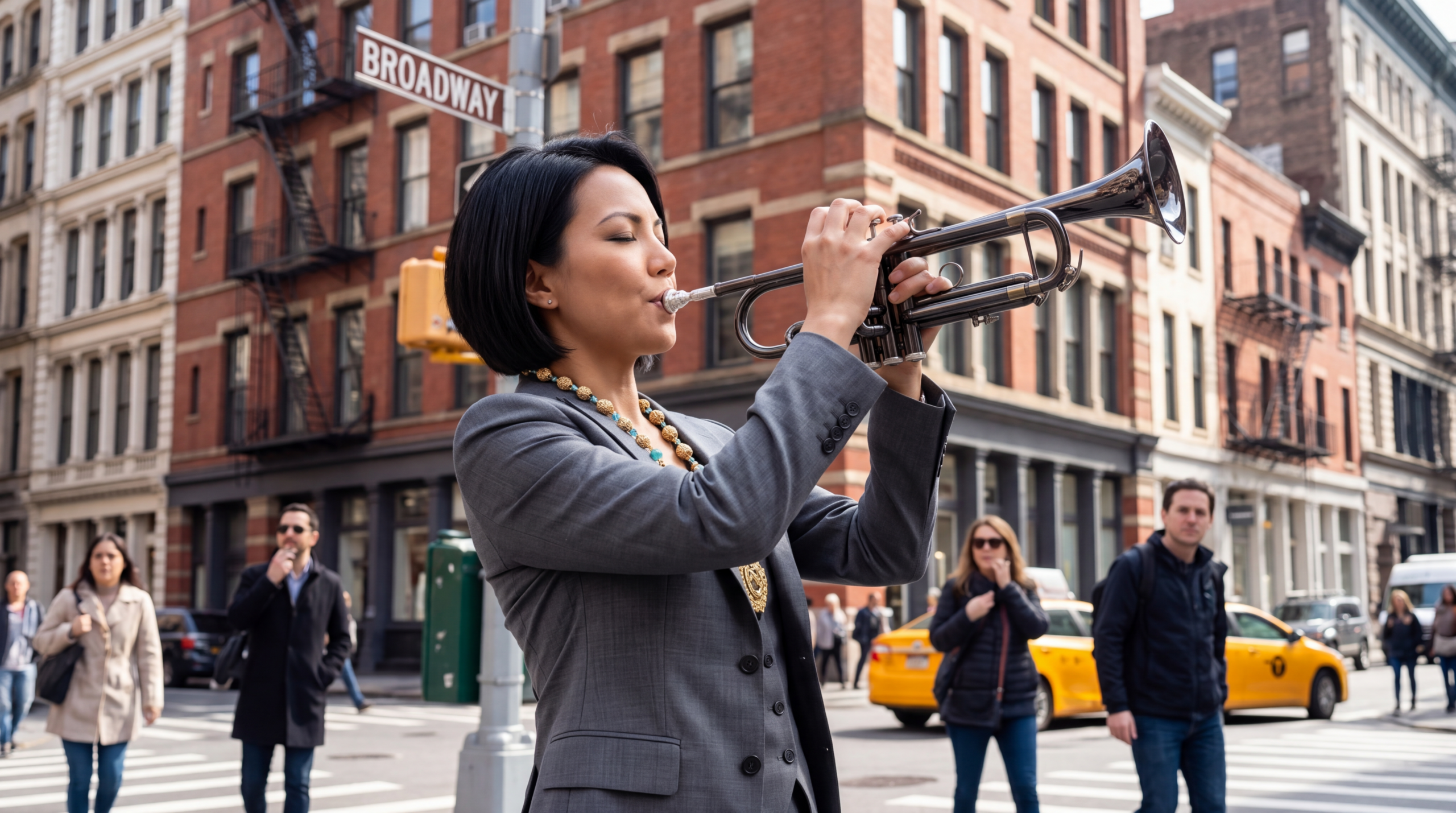
Anita Celeste Bautista‑Weiss was born in Los Angeles on January 20, 2001, California, to Filipino immigrant parents who carried with them a deep respect for discipline, education, and music. Her home was filled with sound—Sunday church hymns, vinyl jazz records, classical piano pieces drifting from the radio, and the steady rhythm of everyday life shaped by hard work and faith. Music was never treated as a novelty; it was a language, a responsibility, and a form of devotion.

From a young age, Anita showed an unusual sensitivity to sound. She learned piano early, not simply as an instrument to be practiced, but as a way to understand harmony, structure, and how emotions move through chords. Percussion followed soon after, driven by her fascination with rhythm—how time could be stretched, compressed, and reordered. When she first picked up a trumpet, something clicked. The instrument felt like a voice capable of both restraint and ferocity, capable of cutting through space while still remaining intimate.
By her teenage years, Anita was no longer content with single genres. She listened obsessively and without hierarchy—jazz legends, hip‑hop producers, classical composers, and heavy metal bands all feeding her curiosity. Rather than choosing between them, she began quietly stitching them together in her own writing, learning which elements could coexist and which needed to be reimagined.

I still play it today.
I called her “Yannie”.
The name “Yannie” is of Greek origin and is typically a diminutive form of “Ioanna” or “Yianna,” meaning “God is gracious” or “God’s gift”.
This instinct—for synthesis rather than imitation—set her apart.
Her acceptance into The Juilliard School marked a turning point in 2011. There, Anita entered an environment that demanded technical excellence while quietly testing creative courage. She thrived in composition labs and ensemble settings, often pushing ideas beyond their original scope. She was known among peers not for dominance, but for clarity. She heard music spatially—how sections moved, how tension resolved, how silence functioned as structure.
It was at Juilliard that she met Marco Alessandro Weiss in 2012, a trombonist with an analytical ear and an uncommon lack of ego. Their relationship began through collaboration, not romance—late rehearsals, problem‑solving sessions, and conversations that lingered long after practice rooms emptied. Marco understood how to translate complex musical ideas into reliable execution, and Anita recognized that he never tried to reshape her voice—only to reinforce it.
School was expensive. New York is expensive. Like many serious artists in New York, Anita did not begin her career cushioned by prestige. Instead, she took a blue‑collar construction job, working early mornings on sites across the city. The work was physical, unglamorous, and demanding lifting, measuring, building, repairing. It paid the bills. It also kept her grounded.
Construction made sense to her.
She understood materials. Structure. Load‑bearing limits. The difference between something that looks finished and something that is finished. These lessons transferred naturally into her music. Her compositions became architectural—layered, intentional, and resilient. Every section had purpose. Nothing floated without support.
She worked construction by day and composed by night.
Rehearsals happened after full shifts. Performances followed long workweeks. Anita never hid her day job, nor did she romanticize struggle. For her, labor and artistry were not opposites—they were parallel expressions of discipline.




As their romantic relationship developed, so did outside pressures. Anita’s compositional voice was gaining recognition, while Marco balanced his own demanding training—both musically and athletically, having pursued elite marathon competition and even Olympic trials. Near the end of their Juilliard years, they made a deliberate and painful decision to separate, agreeing to spend six months apart after graduation to ensure their futures were chosen freely rather than by proximity or habit.
The time apart sharpened everything. Anita advanced artistically but realized how often she still imagined Marco’s perspective when refining her work. Marco, immersed in technology, lighting design, and systems programming, came to clarity about his role—not as a diminished presence, but as someone who found profound fulfillment in building environments where others could shine.
They reunited quietly. There was no grand reunion—only certainty.
They married in 2022 after the COVID19 pandemic in a small civil ceremony at the Manhattan Marriage Bureau, officiated by a City Clerk wedding officiant.

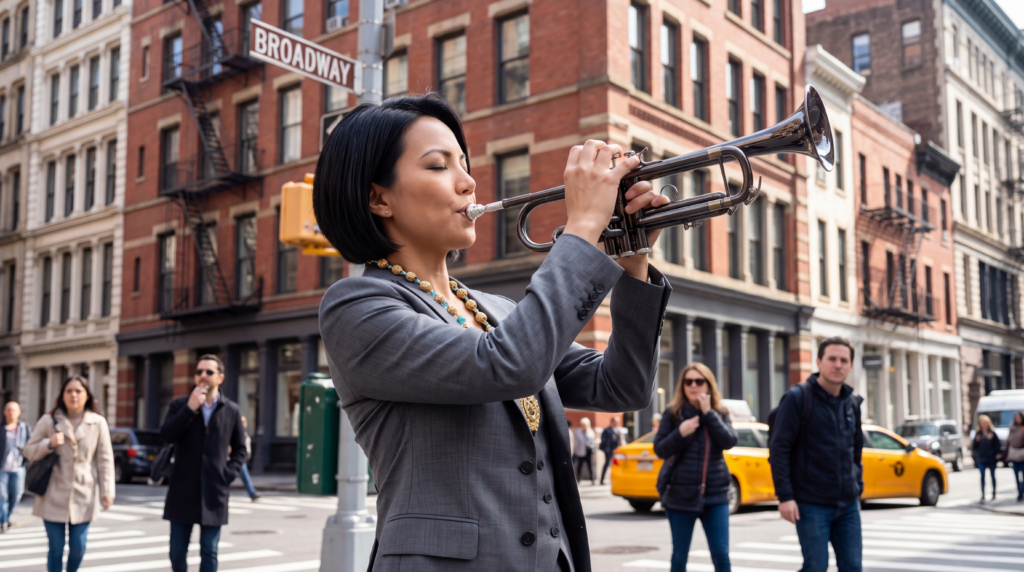

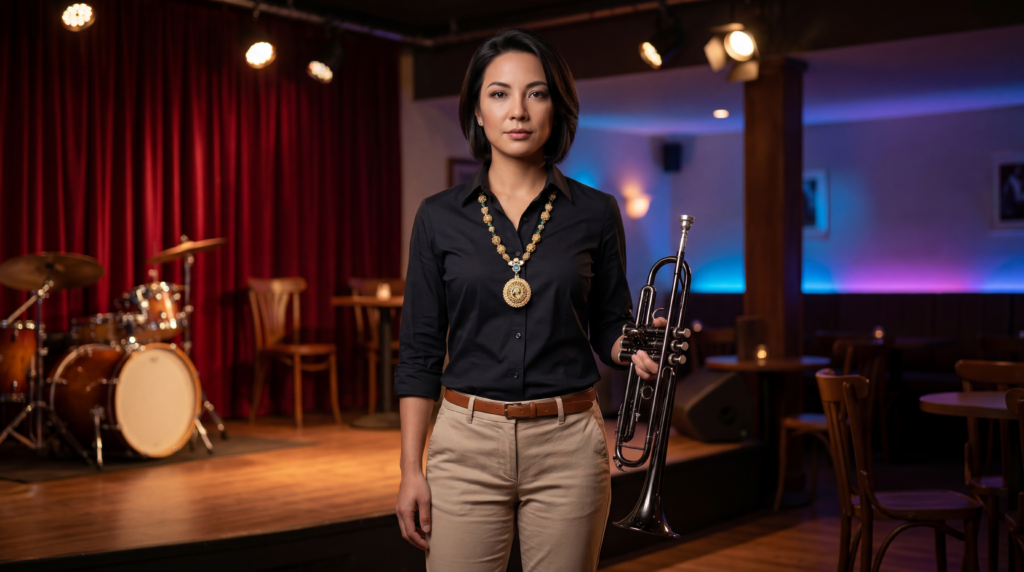
Anita chose to carry both identities forward, becoming Anita Celeste Bautista‑Weiss, honoring her heritage while embracing her partnership. Professionally, she emerged as a bandleader and composer whose work defied easy categorization—jazz at its core, but informed by hip‑hop rhythms, metal intensity, classical architecture, and contemporary production.
Marco became her closest collaborator and technical counterpart: refining form, advising on structure, designing synchronized DMX lighting systems that transformed performances into immersive environments. He remained out of the spotlight by choice, not by necessity—confident in the knowledge that leadership and visibility are not the same thing.
Today, Anita stands on the brink of broader recognition, leading her band through clubs, venues, and experimental spaces across New York and beyond. Her music is intricate but accessible, demanding yet deeply human. Every performance reflects her journey—discipline without rigidity, ambition without ego, complexity guided by instinct.
And at the center of it all is a sound that is unmistakably hers.
She still respects work done by hand.
She still believes in structures that hold.
And whether she’s on a construction site or a stage, Anita Bautista‑Weiss builds things meant to last.